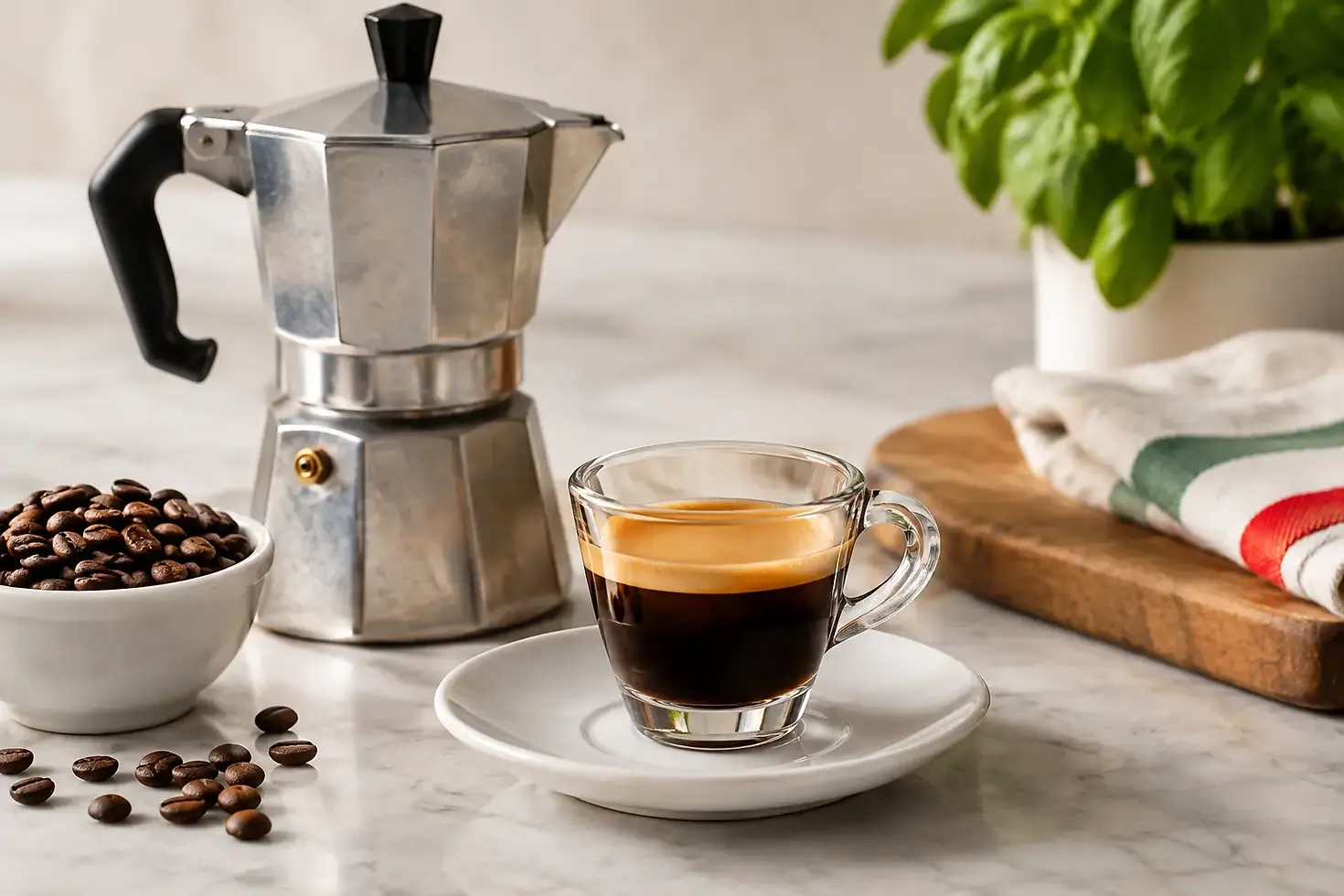
How to Make Espresso at Home the Italian Way
The first espresso of the morning should not taste like a compromise. It should be fragrant, full-bodied, and crowned with a warm hazelnut-colored crema that makes you pause before the first sip. Learning how to make espresso at home is less about buying a complicated machine and more about respecting a few small details - especially the beans, grind, dose, and timing.
In Southern Italian homes, espresso is a daily ritual, not a chemistry experiment. You do not need to chase perfection on day one. Start with good coffee, pay attention to what is in your cup, and make one adjustment at a time. Before long, your kitchen will smell like the part of Italy you have been missing.
Start With Beans Made for Espresso
Espresso is concentrated. That means every quality of the coffee comes through clearly: its sweetness, roast character, body, and any bitterness. Ordinary pre-ground coffee can make a drinkable cup, but it rarely delivers the deep, balanced flavor people expect from a proper Italian espresso.
Choose beans roasted for espresso, ideally in whole-bean form. A traditional Southern Italian-style blend often brings the qualities many espresso drinkers love: a full body, chocolate and toasted notes, satisfying crema, and a finish that stands up beautifully on its own or with a spoonful of sugar.
Freshness matters, but do not confuse freshness with coffee roasted yesterday. Espresso beans generally benefit from a little time after roasting to settle and release excess gas. What matters most at home is keeping them protected from heat, moisture, sunlight, and air. Store beans in an airtight container in a cool cabinet, not in the refrigerator. Grind only what you need before brewing whenever possible.
Caffè Romano brings beans roasted in Siderno, Reggio Calabria, directly to American espresso drinkers for exactly this reason: the coffee in your cup should have a story, a source, and real Italian character.
The Equipment You Actually Need
An espresso machine with a portafilter gives you the most control and the closest café-style result. You will also want a burr grinder, a tamper that fits your basket, a small scale, and a timer. That may sound like a lot, but each tool solves a simple problem: consistency.
A burr grinder is the biggest upgrade for most home setups. Blade grinders chop coffee into uneven pieces, so water races through some grounds while getting stuck in others. The result is often sour, bitter, or both. Burr grinders create more uniform particles, which lets water extract flavor more evenly.
If you have a moka pot, do not let anyone tell you it is second best. It makes a strong, rich Italian coffee, though technically it does not produce true espresso because it brews at lower pressure. Treat it as its own beloved ritual. Use a slightly coarser grind than espresso, fill the basket without tamping, and brew over low to medium heat.
Capsule machines are convenient, especially on busy mornings, but they offer less control over bean choice, freshness, and flavor. They can be a fine entry point. Still, if the goal is that classic bar espresso experience at home, a machine and fresh beans are worth the attention.
How to Make Espresso at Home, Step by Step
For a standard double espresso, begin with 18 grams of coffee in and aim for roughly 36 grams of espresso out. This 1:2 ratio is a dependable starting point, not a rule carved in stone. Different coffees and personal tastes may call for small changes.
Warm the machine and cup
Turn on your machine early enough for the group head to fully heat. Run a brief shot of water through it before brewing. This clears old coffee residue and stabilizes the temperature. Warm your demitasse cup, too. A cold cup can steal heat from a small espresso very quickly.
Grind, dose, and distribute
Grind your coffee fine, with a texture somewhere between table salt and powdered sugar. Place 18 grams in the portafilter basket. Gently level the grounds so there are no obvious hills or empty spots.
Distribution does not need to be fussy. A few light taps and a level surface are enough to start. What you are trying to avoid is channeling, when water finds an easy path through weak spots in the puck and leaves the rest under-extracted.
Tamp with a level hand
Set the portafilter on a stable surface and press straight down with the tamper until the coffee bed is compact and even. You do not need superhero strength. A level, repeatable tamp matters more than pressing as hard as possible.
Wipe loose grounds from the rim of the portafilter, lock it into the group head, and start brewing right away. Once ground coffee is exposed to air, its aromas begin to fade.
Watch the shot, then taste it
A good double shot often begins with a few dark drops, then flows into a thin, steady stream that looks a little like warm honey. Aim for about 25 to 30 seconds from the moment you start the pump, with your 36-gram yield as the target.
But enough is enough, espresso lovers: do not let the timer boss you around if the cup says otherwise. Taste the shot. Espresso should feel concentrated but balanced, with a pleasant bitterness, some sweetness, and a lingering finish. The crema should be inviting, but it is not the whole story. Great flavor matters more than a pretty surface.
Fix the Cup Before You Blame the Coffee
Even beautiful beans can produce a disappointing shot when the grind or brewing setup is off. The good news is that espresso problems are usually fixable with one small adjustment.
If your espresso runs fast, looks pale, and tastes thin or sharply sour, grind finer. Water has passed through too easily and has not pulled enough flavor from the coffee. If it drips painfully slowly and tastes dry, harsh, or burnt, grind coarser. In that case, water has had too much contact with the grounds.
A shot that tastes both sour and bitter may be channeling. Check that your dose is even and your tamp is level. It can also mean your grinder is producing too many uneven particles. This is where a quality burr grinder earns its place on the counter.
If the flavor is flat, first make sure your machine is hot and your beans are fresh enough. Then consider your water. Heavily chlorinated or very hard water can dull coffee flavor and leave mineral buildup inside the machine. Filtered water is often a simple improvement, provided it is not completely stripped of minerals.
Change only one variable at a time. Adjusting the grind, dose, yield, and temperature all at once turns a simple morning ritual into a guessing game. Pull a shot, take a note, and make one thoughtful correction. That is how consistency arrives.
Make It Your House Espresso Ritual
The best part of making espresso at home is that it belongs to your table. Serve it in a small, warmed cup. Drink it after breakfast, after dinner, or whenever the day calls for five quiet minutes. Add sugar if that is how your family enjoys it. Pair it with a biscotti, a square of dark chocolate, or nothing at all.
Milk drinks deserve the same care. For a cappuccino, steam cold milk until it is glossy and lightly sweet, not stiff and foamy like a bubble bath. Whole milk is the easiest place to begin because its fat gives the texture more forgiveness. Oat milk can work well, too, especially a barista-style version, though results depend on the brand and your steaming technique.
Clean the portafilter and purge the steam wand after every use. Coffee oils build up quickly, and old residue has a way of sneaking into tomorrow's shot. A clean machine protects the flavor of the sweet, sweet beans you chose.
Do not wait for a perfect setup to begin. Make a cup, notice what it gives you, and make the next one a little better. That patient attention is how an ordinary kitchen becomes the place everyone gathers when it is time for espresso.


Comments